Blue Tit
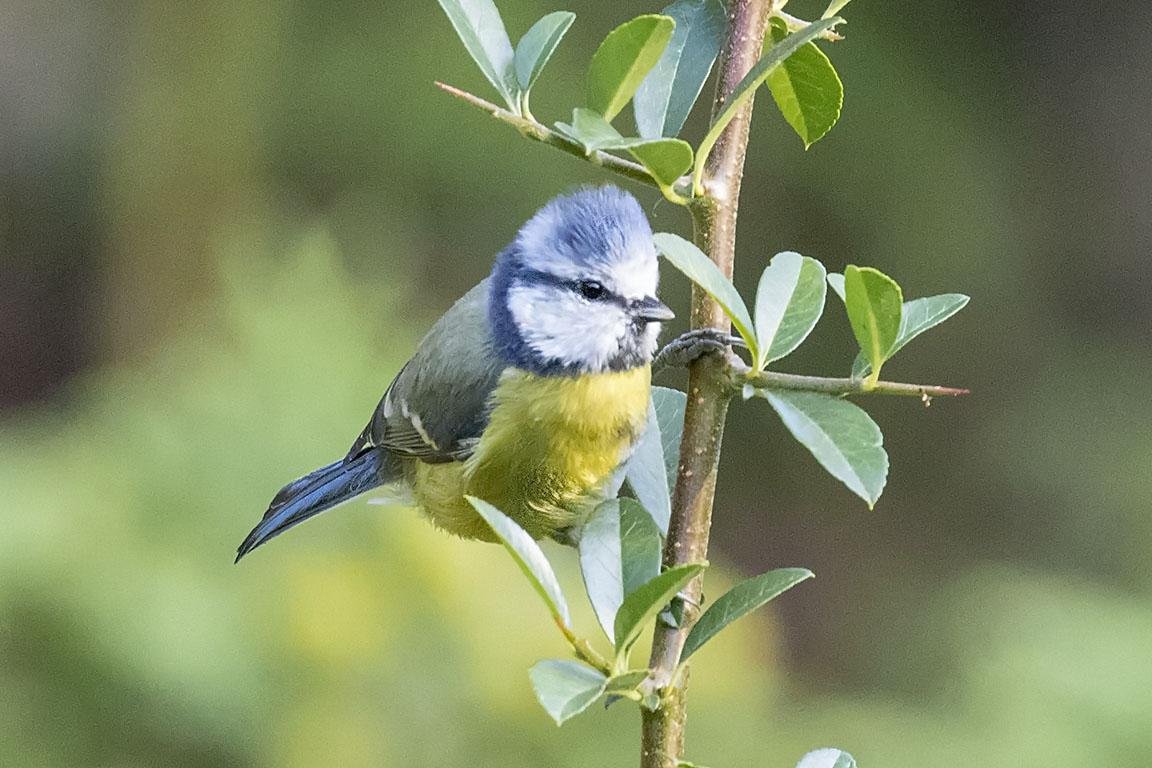
Municipal Park, Luxembourg
The Eurasian blue tit is a common, widely distributed bird across Europe and Western Asia. There are an estimated 3,535,000 breeding pairs in the United Kingdom alone.
Habitat
The blue tit is an arboreal species. It is usually found in deciduous woodland and in parks and gardens even in urban centres.
Feeding
The Eurasian blue tit has a diet that consists mainly of insects, spiders and other small invertebrates. It will forage by opening buds and peeling bark from trees, Outside the breeding season, it will also eat for fruit and seeds.
Breeding
Eurasian blue tits nest in any available holes in trees, walls and often in nest boxes with the same sites occupied each year. The female constructs a nest of materials such as moss and lines the cup with down, fur or wool. She also incubates the large clutch of usually 8-10 whitish eggs with reddish-brown speckles gathered at the broader end. The male feeds her during the incubation period. Both parents raise the chicks.
Wildfile Specials
- The Eurasian blue tit is very agile, running up vertical tree trunks and hanging upside down from branches.
- The Eurasian blue tit's favourite foods of coccids and aphids makes it very popular with gardeners..
- Blue tits are sexually promiscuous and regularly copulate with other birds.
- Blue tits often compete with great tits and house sparrows for nesting holes.
- Blue Tits lay more eggs than nearly any other bird with 16 recorded in a single clutch.
- Female Eurasian blue tits are close sitters and will even hiss and bite intruding fingers. In southwest England they have earned the nickname Little Billy Biter.
- In UK blue tits have learnt to pierce milk bottle tops to extract the cream.
- Juvenile blue tits have a 38% survival rate. Adults live an average of 3 years.